Sofia’s old stones tell stories fast. This is a small-group walking tour with a short tram/metro ride that helps you connect the dots between Roman remains, big Orthodox landmarks, and newer cultural stops, all in just a couple hours. I like the way the route mixes time periods without turning into a long lecture, and you’ll appreciate quick “look here” guidance at places most people only snap a photo at.
My favorite part is the access rhythm: several major stops are quick and practical, and the guide keeps things moving so you don’t waste daylight circling blocks. One thing to consider is that many stops are brief (often around 5–15 minutes), so if you want slow museum wandering or deep chapel time, you’ll likely want to schedule follow-up visits on your own.
In This Review
- Key Highlights You’ll Care About
- How This Tour Helps You Understand Sofia, Not Just See It
- Price and What It Actually Buys You
- Meeting at St. Sofia Church and Ending at Central Market Hall
- Stop 1: St. Sofia Church and the Council of Serdica
- Stop 2: St. Alexander Nevski Cathedral in Neo-Byzantine Style
- Stop 3: Kvadrat 500 (National Gallery) for a Fast Art Timeline
- Stop 4: St. Cyril and St. Methodius National Library (Inside)
- Stop 5: Sofia University St. Kliment Ohridski (Inside)
- National Theatre Building and Largo: Art Nouveau Meets Socialist Classicism
- Stop 6: Rotunda Church of St George and Roman Baths
- Stop 7: Ancient Serdica Archaeological Complex Under the City
- Stop 8: Central Mineral Baths (Vienna Secession Meets Bulgarian Details)
- Stop 9: Central Sofia Synagogue and the Story Behind the Stones
- Stop 10: West Gate of Serdica and Sofia’s Fortress Edges
- Stop 11: Zhenski Pazar Market and Everyday City Energy
- Bonus Stop: Banya Bashi Mosque Near the Hot Springs
- Tram/Metro Ride and Transport Card: The Easy Way Between Worlds
- What Makes the Guide Experience Feel Worth It
- Who Should Book This Tour
- Should You Book This Sofia Walking Tour?
- FAQ
- How long is the Sofia Hidden Gems tour?
- What is the price per person?
- Is the tour in English?
- How many people are in the group?
- What’s included in the tour?
- Where does the tour start and end?
- Are any stops free to enter?
- Is a mobile ticket used?
- What’s the cancellation policy?
Key Highlights You’ll Care About
- Max 10 travelers keeps the pace human and questions actually get answered
- Free-entry stops at several landmarks help you control costs while still seeing major sights
- Inside visits at the National Library and Sofia University give you more than exterior photo ops
- Kvadrat 500 quick hit shows how Bulgaria’s art connects from the 1890s to modern collections
- Roman to Ottoman to socialist Sofia in one route, with clear “why this matters” commentary
How This Tour Helps You Understand Sofia, Not Just See It
Sofia can feel like layers stacked on top of each other. One minute you’re near a cathedral that dominates the skyline; the next you’re looking at Roman walls that predate the city’s modern identity. This tour is designed for that exact problem: it links places with short explanations so you walk away with a mental map that sticks.
I also like the logistics here. You get a guide in English, a city transport card, and a short tram/metro ride built into the plan. That matters because Sofia’s Old Center is walkable, but hopping between key points is easier when you’re not guessing routes on the fly.
The small-group size is a quiet superpower. With up to 10 people, you can ask follow-ups and still keep the group together. From the guide style, you can expect a patient, energetic pace rather than a “keep up” vibe.
You can also read our reviews of more tours and experiences in Sofia.
Price and What It Actually Buys You
At $45.66 per person for about 2–3 hours, you’re not paying for a long, museum-style day. You’re paying for three practical things: a focused route, a guide who can answer questions about what you’re seeing, and included public transport for a short ride.
Value gets even better because multiple stops are listed with free admission. When a tour includes major landmarks that don’t charge you on site, your money goes toward interpretation and time-saving. And since the tour includes travel time between stops, you’re getting a real itinerary, not just a “meet me and good luck.”
If you’re in Sofia for a short stay, this price usually feels fair for the amount of territory you cover and the number of historically important stops you can hit in one go.
Meeting at St. Sofia Church and Ending at Central Market Hall
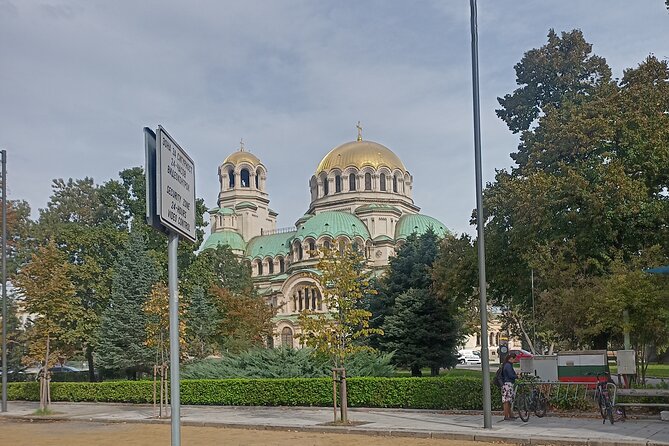
You start at St. Sofia Church in the Old City Center, on ul. Paris 2. The tour ends at the Central Market Hall (near a bus station), at bul. Knyaginya Maria Luiza 25, level -1, which makes it easy to continue your day without backtracking.
This start-and-finish plan is smart. Early on, you begin in the right “story zone” for Sofia’s identity. Later, you finish close to a transit-friendly area and a classic place to grab snacks or keep wandering.
Also, you get a mobile ticket. That’s one less thing to manage when you’re moving between places.
Stop 1: St. Sofia Church and the Council of Serdica
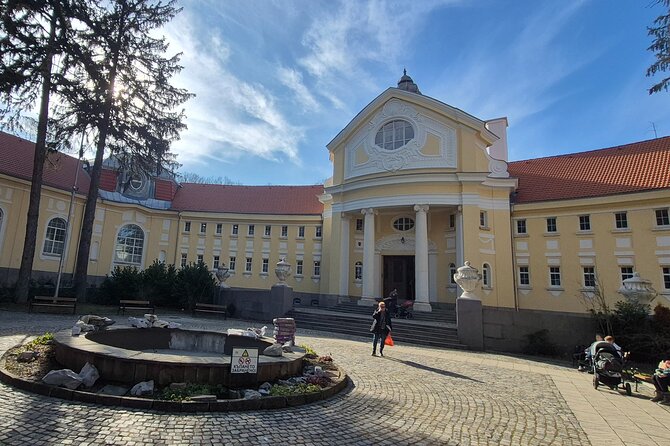
Your first big anchor is Saint Sofia Church (църква „Света София“), dating to the fourth century. It’s one of Sofia’s oldest churches, and the earlier building is tied to the Council of Serdica, likely held in 343, with 316 bishops in attendance.
Here’s what you should notice: this is where “Sofia” as a city name connects directly to the church. The information on site links the 14th-century naming shift—Sofia was previously known as Serdika. That alone makes the opening stop feel like more than a warm-up.
You’ll have about 10 minutes, and the admission is listed as free. Treat this stop as your orientation. When you understand why the city’s name comes from Holy Wisdom, the rest of the route feels more connected.
Stop 2: St. Alexander Nevski Cathedral in Neo-Byzantine Style
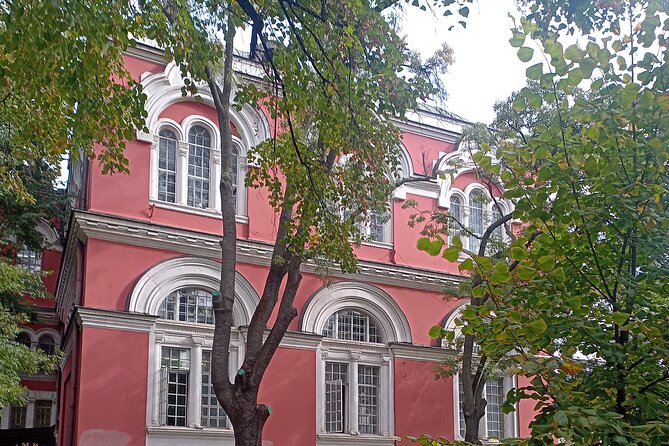
Next you head to St. Alexander Nevski Cathedral, a Bulgarian Orthodox cathedral in Neo-Byzantine style. It’s described as one of the 50 largest Christian church buildings by volume in the world, so even with a short visit, the scale hits you fast.
This is a great stop for learning how Sofia expresses faith through architecture. The “byzantine” look isn’t just decorative. It’s part of how the city communicates continuity with older Christian traditions.
You’ll spend around 10 minutes, and admission is listed as free. In a short time window, focus on the overall shape and details rather than expecting a full slow interior experience.

Stop 3: Kvadrat 500 (National Gallery) for a Fast Art Timeline
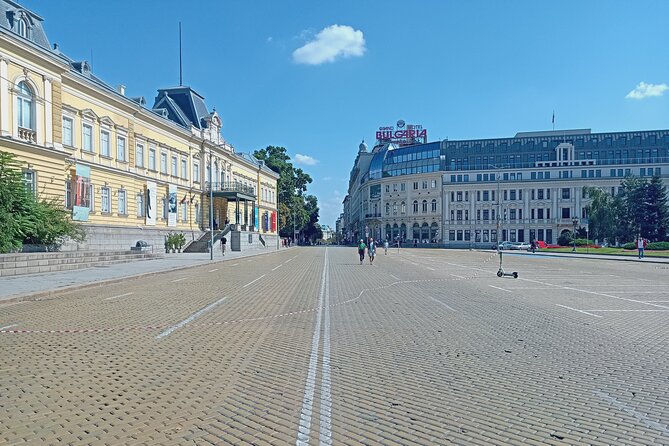
Kvadrat 500 is Sofia’s newer National Gallery building, opened 25 May 2015. It presents about 1,700 artworks across 28 halls on four levels, with collections spanning Bulgarian art (from the 1890s) and foreign works formed mostly in the 1980s.
You won’t have hours here. Think of it as a “reset your art context” stop. If you’re the type who likes to understand what you’ll see in later museum visits, this quick introduction is worth it.
One more reason I like this inclusion: the gallery’s scope isn’t limited to Europe. The description points to exhibits from Asia, Africa, and America, which helps you spot how Sofia’s museum world isn’t just local.
Stop 4: St. Cyril and St. Methodius National Library (Inside)
Sofia’s St. Cyrill and St. Methodius National Library is presented as the largest book treasury in Bulgaria, with nearly 8.5 million documents. It also receives around 70,000 publications every year, which gives you a sense of the library as a living institution, not just a historic building.
The tour includes time inside the library (listed as free admission and about 10 minutes). That’s a big deal for a walking tour—libraries are usually pass-by stops. Here, you get a chance to see the place, not only the exterior.
If you enjoy architecture or you’re curious about Bulgarian cultural priorities, this is one of those stops where you can feel the country’s long view on education and preservation.
Stop 5: Sofia University St. Kliment Ohridski (Inside)
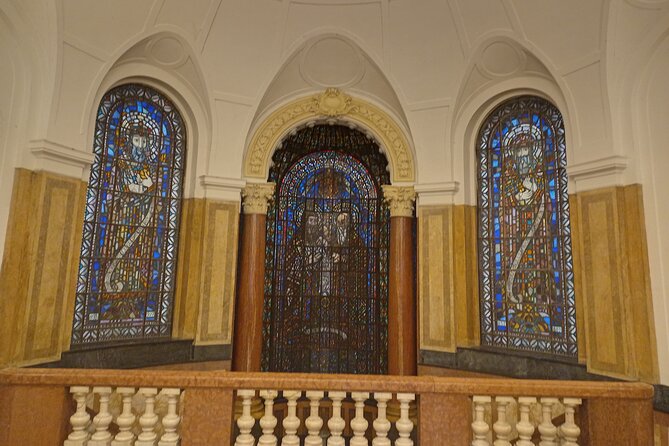
Next comes Sofia University St. Kliment Ohridski, described as the first higher educational institution in Bulgaria. The tour frames its story through centuries of cultural and educational tradition, then connects it to key periods like the Bulgarian Renaissance and the post-liberation push for higher education.
You’ll also visit inside this one, with about 10 minutes and free admission listed. The university building is given as built 1884–1886, designed by Constantin Yovanovic, who studied in Vienna and Switzerland. The style is neo-Renaissance, and the guide context links Yovanovic to other major works, including the design for the Serbian Assembly.
This stop works well because it’s not just “look at a building.” You’re learning why Sofia became a university city, and you get a clear sense of education as part of national identity.
National Theatre Building and Largo: Art Nouveau Meets Socialist Classicism
After the university, the tour moves into two very different architectural moods: the National Theatre and Largo.
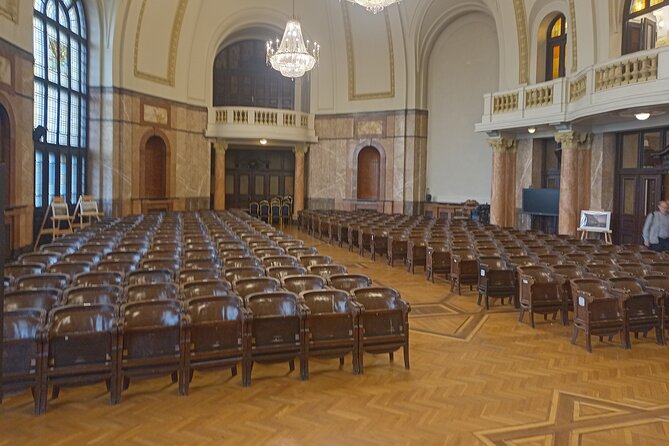
The National Theatre building is listed as finished in 1906, with the opening ceremony on 3 January 1907. It’s designed by Ferdinand Fellner and Hermann Helmer, famous for early 20th-century theater architecture. The auditorium seating is noted as 848, and the plafond/walls are described as painted by Rudolf Fuchs from Vienna. The style is Art Nouveau, so you’ll feel the theater’s role as Sofia’s representative showpiece.
Then comes Largo, an architectural ensemble of three Socialist Classicism buildings built in the 1950s. This contrast is useful. It shows you that Sofia didn’t just build “old-world” landmarks. It kept reshaping its public spaces as politics and taste changed.
If you only do one walking tour in Sofia, this pair of stops helps you understand the city’s big visual language—then you’ll start noticing it everywhere else.
Stop 6: Rotunda Church of St George and Roman Baths
The Rotunda Church of St George is one of the oldest structures associated with modern Sofia. It’s described as a Late Antique red brick rotunda, originally built in the early 4th century as Roman baths. Later, it became a church inside the walls of ancient Serdica.
You’ll hear (and you should keep in mind) that this building is considered the oldest structure in modern Sofia and belongs to the Bulgarian Orthodox Church. Even if you only have 5 minutes, the layered use—baths turned church—explains why Sofia feels like a place where eras overwrite each other instead of separating cleanly.
Think of this stop as a time-machine moment. The guide framing makes the architecture feel personal rather than random.
Stop 7: Ancient Serdica Archaeological Complex Under the City
Next is the Ancient Serdica Archaeological Complex, described as combining areas with different purposes into two zones. One zone, tied to the Largo area underneath Nezavisimost Square, integrates unearthed remains into a site for cultural events.
You’ll see remnants including one of the main Roman streets, the decumanus maximus, connecting the eastern and western gates. The description also mentions a large residential building covering an entire insula, with small shops at street level and a lapidarium nearby.
This is one of the longest listed stops on the route—about 15 minutes. Use that time to ask yourself what the street would have felt like: movement, commerce, daily life. The more you picture it, the less the ruins feel like “rocks in a park” and the more they feel like a real city that lived here.
Stop 8: Central Mineral Baths (Vienna Secession Meets Bulgarian Details)
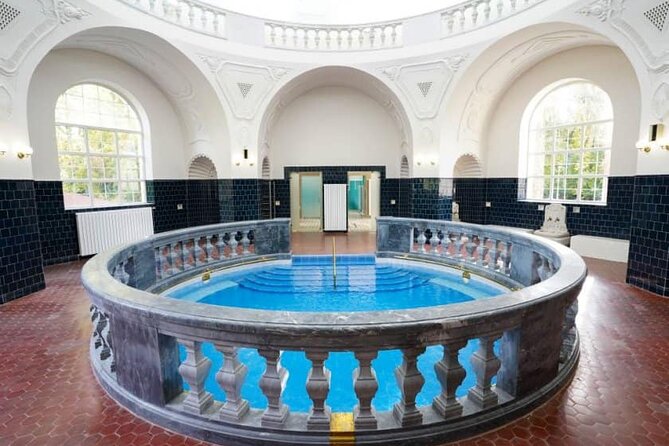
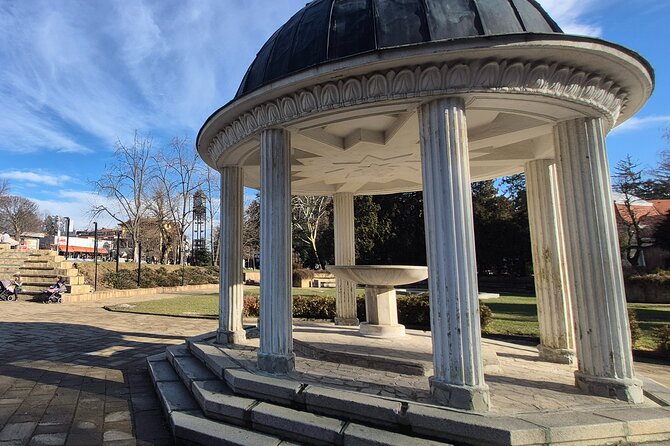
Sofia’s Central Mineral Baths is another architecture-and-identity stop. The current building is described as Vienna Secession style but combined with Bulgarian, Byzantine, and Eastern Orthodox ornamental elements.
Architects credited here are Petko Momchilov and Friedrich Grünanger, with construction described as 1904–1905 and approval on 30 January 1906. The notes also say earlier designs by an Austrian architect in 1889 and a French architect in 1901 were declined, which adds a layer of “Sofia wasn’t built in one neat decision.” It evolved.
You’ll have about 10 minutes, and admission is listed as free. Even if you don’t plan to soak later, this stop is worth it to understand why Sofia’s thermal history ended up in landmark architecture.
Stop 9: Central Sofia Synagogue and the Story Behind the Stones
The Central Sofia Synagogue is explained through the Jewish community’s turn toward a prominent European architect. The tour description says donations were collected in the early 20th century, and Friedrich Grünanger was invited to prepare the project for the synagogue. Construction is described as completed in just 4 years.
Look for the detail about the 10 top contributors listed on the left wall after entering. The synagogue base is also described as built using tombstones from an old Jewish cemetery. That’s the kind of information you won’t guess from exterior photos.
The tour also lists the construction value as 437,000 golden leva, and it notes the synagogue was built on the old site of another synagogue called Ahava ve Chesed. If you enjoy religious history and how communities adapt over time, this stop offers real context in a short window.
Stop 10: West Gate of Serdica and Sofia’s Fortress Edges
You then move to the West Gate of Serdica, protected by towers. The preserved section includes a pentagonal tower next to the gate and a triangular tower nearby. It’s located between St. Joseph Catholic Cathedral on Todor Alexandrov boulevard and the Monument Symbol of Sofia.
This is a small stop—about 5 minutes—but it’s a useful punctuation mark. Early in the walk you get Roman and religious centers. Here you see the idea of fortification, the edges of the ancient city.
When you notice where the gate sits relative to modern landmarks, Sofia’s Old Center starts to click into place.
Stop 11: Zhenski Pazar Market and Everyday City Energy
Zhenski Pazar Market is described as the oldest market in Sofia, established more than 140 years ago. It’s one of the city’s most important trading centers in the metropolitan area.
You’ll have about 10 minutes. This isn’t a shopping hour. It’s your chance to see what “city life” looks like between the monuments. Markets like this often tell you more about daily history than big buildings do.
If you want snacks later, finish-market time is usually the best moment to do it.
Bonus Stop: Banya Bashi Mosque Near the Hot Springs
The tour description includes Banya Bashi Mosque, located near the hot mineral springs in central Sofia. It was built in 1576 during the Ottoman military expansion by architect Miamar Sinan, who is also linked to other major mosques in Edirne and Istanbul.
This stop ties back to Sofia’s mineral bath story and helps you see Ottoman influence as something practical and embedded, not just decorative. Even in a short stop, it gives you a meaningful layer in the city’s timeline.
Tram/Metro Ride and Transport Card: The Easy Way Between Worlds
A big practical win here is the included city transport card and the tram/metro short ride. On a route full of historic stops, this prevents fatigue from turning into “I’ll skip the next place.”
You also get the included travel time from stop to stop. That’s important because in real life, you’re always losing minutes to waiting and walking between points. Here, the tour plan accounts for that.
If you’re visiting in hot weather, this transport support also helps you keep your energy for the parts that require your attention.
What Makes the Guide Experience Feel Worth It
Peter’s Tours is led by Peter, and the guide style shows up clearly in the tone of the experience. You can expect patience and energy, plus plenty of room for questions about Bulgaria, not just quick facts recited at you.
From the details shared, Peter also goes beyond the list when appropriate with bonus locations, and he’s willing to slow down for practical moments like letting you buy souvenirs. That kind of flexibility can make the tour feel like a guided walk with a local expert, not a rigid marching band.
It’s also worth noting how small gestures help. Even the simple mention of water signals that the tour isn’t only about history. It’s about keeping you comfortable enough to enjoy it.
Who Should Book This Tour
This tour is a great fit if:
- you want a fast, organized way to understand central Sofia’s big layers
- you like architecture, museums, and historic sites but don’t want a full-day commitment
- you prefer small groups where questions stay welcome
- you’re visiting in English and want guided context without struggling through every explanation alone
You might want to skip it (or plan extra time after) if you’re the type who expects long stays in museums or very detailed interior visits at every stop. The route is designed for movement and multiple highlights, not one slow deep-dive day.
Should You Book This Sofia Walking Tour?
I’d book it if you want a smart first Sofia experience. The mix of Orthodox landmarks, Roman-era remains of Serdica, and Ottoman-era influence around bath and mosque culture gives you a balanced picture of what Sofia actually is: a layered city where eras overlap.
The value holds up because the tour includes transport, a small-group setting, and several stops with free entry. Plus, the guide approach—patient, energetic, and question-friendly—can turn a list of landmarks into something you understand.
If you have only half a day (or a little more) in Sofia, this is a strong way to get your bearings fast and leave with ideas for what to revisit later on your own.
FAQ
How long is the Sofia Hidden Gems tour?
The duration is listed as about 2 to 3 hours.
What is the price per person?
The price is $45.66 per person.
Is the tour in English?
Yes, the tour is offered in English.
How many people are in the group?
The maximum group size is 10 travelers.
What’s included in the tour?
Included are an English guide, a city transport card, and a tram/metro short ride.
Where does the tour start and end?
It starts at St. Sofia Church (ul. Paris 2, 1000 Sofia) and ends at Central Market Hall of Sofia (bul. Knyaginya Maria Luiza 25, level -1, Sofia).
Are any stops free to enter?
Admission is listed as free for several stops, including St. Sofia Church, St. Alexander Nevski Cathedral, the National Library, and Sofia University.
Is a mobile ticket used?
Yes, the tour includes a mobile ticket.
What’s the cancellation policy?
Free cancellation is available up to 24 hours in advance for a full refund.