REVIEW · PHUKET
Authentic Thai Cooking Class by Suuko Wellness Spa
Book on Viator →Operated by I Asia Thailand · Bookable on Viator
Cooking Thai food starts with one calm lesson. In Phuket, the Suuko Wellness Phuket Hotel hosts a small-group class where you make classic dishes from scratch in an open kitchen, guided by a certified chef.
What I like most is that the menu can be adapted for your dietary needs and preferences. You’re also not just copying a recipe sheet—you learn technique, including how to make coconut milk straight from the fruit and how Thai curries build from chilies and herbal leaves.
One consideration: this class has a minimum number of travelers. When that minimum isn’t met, there’s a real chance of cancellation and you may need to rebook or take a refund.
In This Review
- Key Things to Know Before You Go
- Suuko Wellness Phuket and the Open-Kitchen Classroom Feel
- How the Class Flows: Prep, Cooking, and the Chef’s Guidance
- The Thai Flavors You’ll Practice: Curries, Chilies, and Herbal Leaves
- Coconut Milk From the Fruit: Why This Technique Matters
- Small-Group Attention With a Maximum of 9 Cooks
- What’s Included in the $56.93 Price (and What Isn’t)
- Dietary Needs and Custom Menu Choices
- The Main Downside: Minimum Bookings and Scheduling Risk
- Who Should Book This Phuket Cooking Class
- Should You Book Authentic Thai Cooking Class by Suuko Wellness Spa?
- FAQ
- How long is the Thai cooking class?
- How many dishes do I cook?
- Where is the class held?
- Is hotel transfer included?
- What’s included in the price?
- What group size should I expect?
- Are dietary needs accommodated?
- What time does the class operate?
- Do I need to bring anything or buy tickets separately?
Key Things to Know Before You Go
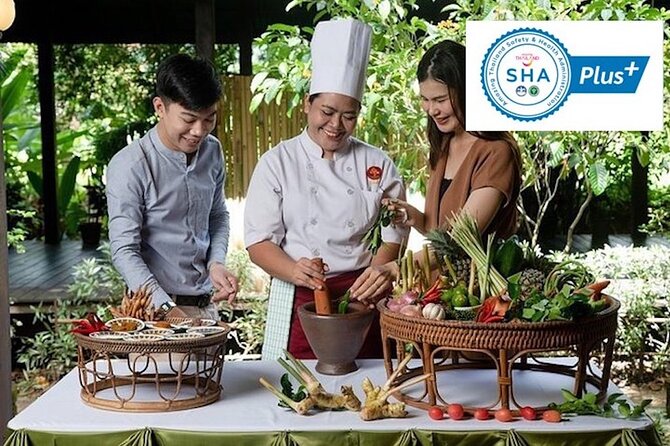
- Open kitchen setup so you can see what’s happening and learn from every step, not just the final plate
- 3 or 4 dishes in about 3 hours keeps it hands-on but not all-day
- Dietary adaptations mean you’re not forced into an all-or-nothing menu
- Coconut milk from the fruit helps you understand the flavor instead of relying on shortcuts
- Max 9 travelers makes it easier to get help when your chopping, stirring, or tasting needs adjustment
Suuko Wellness Phuket and the Open-Kitchen Classroom Feel
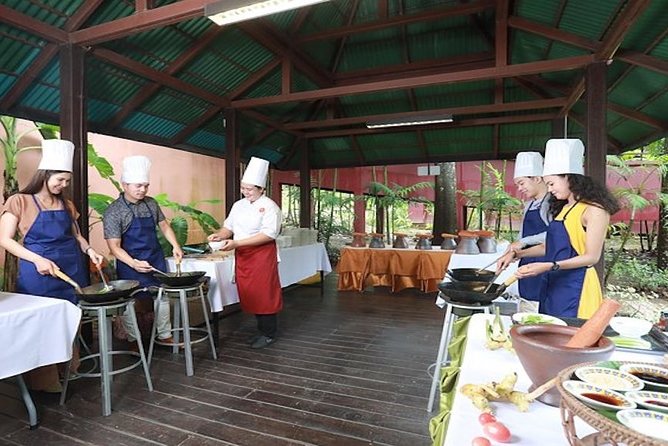
This class is based at the Suuko Wellness Phuket Hotel, in Phuket’s Chalong area (Suuko Wellness & Spa Resort, 5 วิชิต 10). The big difference here is the setting: you cook in an open kitchen, so you’re not stuck in a closed room where you can’t learn from the surrounding prep.
You’re also not walking into a huge factory class. With a maximum of 9 travelers, the experience is built for real interaction—questions, small fixes, and quick taste adjustments. That matters, because Thai cooking is all about balance. If your curry is too sharp, too sweet, or too salty, you need feedback fast.
Finally, Suuko keeps it simple in terms of where you start and end: the activity starts at the hotel and finishes back at the meeting point. That’s one less thing to worry about after a food-filled morning or midday session.
You can also read our reviews of more tours and experiences in Phuket.

How the Class Flows: Prep, Cooking, and the Chef’s Guidance
You’re looking at roughly 3 hours of instruction. The class format is hands-on: you’ll cook 3 or 4 traditional Thai dishes from scratch, guided by a certified chef.
Because the menu can shift based on dietary needs and preferences, don’t expect the exact same dish list every time. What stays consistent is the learning approach. You’ll move through a cooking rhythm: ingredient prep, active cooking, then tasting and tweaking. Thai food doesn’t forgive guesswork, so the tasting step is where the lesson clicks.
You also receive helpful gear—an apron and chef’s hat—which sounds silly until you realize it makes you commit to the role. You’ll be handling fresh ingredients, working with heat, and staying in a real cooking workflow instead of standing on the sidelines.
And yes, there’s a Thai Culinary Arts certificate included. It’s not the main reason to book, but it’s a nice extra, especially if you like collecting proof that you actually learned something.
The Thai Flavors You’ll Practice: Curries, Chilies, and Herbal Leaves
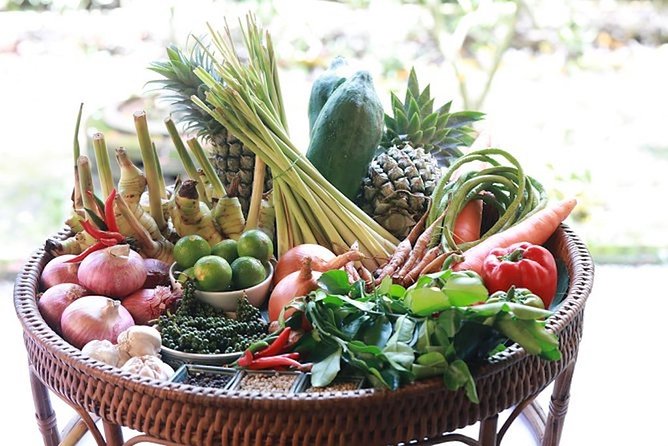
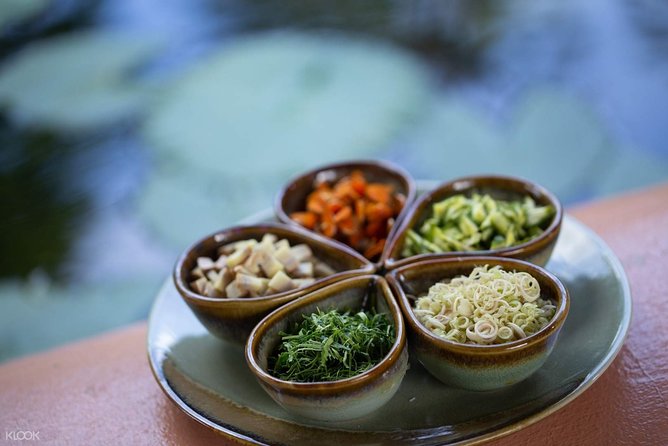
Thai curries can look intimidating in photos: deep color, thick sauce, lots of herbs. The good part is that this class focuses on the building blocks—how the flavors come together instead of treating curry paste as magic.
You’ll learn to make Thai curry from chilies and herbal leaves, and you’ll understand what those ingredients do to the final taste. If you’ve ever tasted Thai curry and thought it was somehow both bold and smooth, this is where that balance gets explained.
This is also why the class is useful even if you’re an okay home cook. You don’t just need a recipe—you need the idea of Thai flavor balance: heat, aroma, acidity, saltiness, and sweetness all pulling in different directions until they harmonize.
The open-kitchen format helps here. When you can watch how your chef handles the aromatics and sauce consistency, you start to copy the method—not just the outcome. That’s what you want if your goal is to cook Thai food again at home.
Coconut Milk From the Fruit: Why This Technique Matters
One of the most interesting elements is the coconut milk lesson. The class description says you’ll learn how to make coconut milk straight from the fruit.
That’s not a small upgrade. Coconut milk isn’t just about richness. It changes texture, rounds off sharp flavors, and creates that signature Thai curry smoothness. When you make it from the fruit, you get a direct feel for how different stages and methods affect the final flavor and consistency.
If you’ve only used packaged coconut milk, this part can be a turning point. You’ll learn what to look for and what to adjust while cooking—whether you want a thinner coconut base or a thicker, more luxurious result.
It also makes you feel less dependent on specialty ingredients later. Even if your exact fruit-to-milk process won’t be practical at home, the technique knowledge helps you make better choices with what you can access.
Small-Group Attention With a Maximum of 9 Cooks
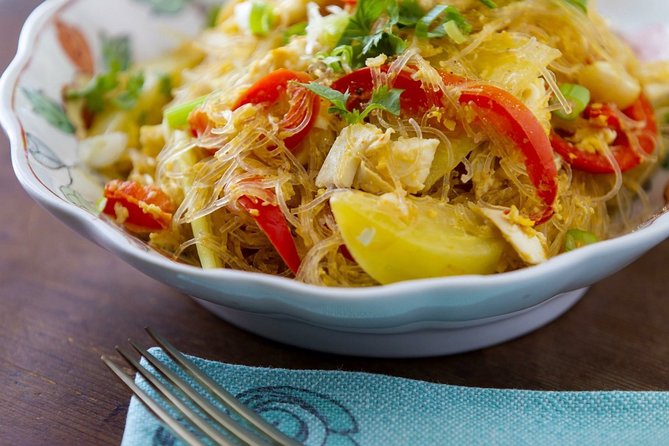
The class is capped at up to 9 travelers, and that’s a big deal in cooking lessons. In larger groups, you get instructions but not much feedback. In a smaller room, mistakes get corrected sooner, and you can ask why something tastes off.
This kind of small group format is ideal if you’re coming with basic cooking skills but want Thai cooking to make sense. The certified chef can guide you while you work, which is where you learn faster—your hands catch up to your understanding.
It also helps with pacing. A 3-hour lesson needs momentum. With a small group, the chef can keep everyone cooking instead of watching a long demo line-by-line.
If you’re traveling solo, this can be a comfort too. You’re part of a group small enough to talk to, without feeling like you’re trapped in a big crowd.
What’s Included in the $56.93 Price (and What Isn’t)
At $56.93 per person, you’re buying a compact, hands-on cooking experience in Phuket. The included items are clear:
- A class where you cook 3 or 4 dishes
- Drinking water
- Apron and chef’s hat
- A Thai Culinary Arts certificate
What’s not included is hotel transfer. So you’ll want to plan your own ride to Suuko Wellness & Spa Resort (the meeting point). On the plus side, the location is noted as near public transportation, which can make getting there easier than it sounds in Phuket.
Value-wise, I think the best way to judge the price is this: you’re paying for chef time plus ingredients plus structured learning. A 3-hour cooking class is a sweet spot—long enough to learn multiple dishes and techniques, short enough that you’re not spending your whole day tied up.
For many people, that’s exactly what they want on a trip: a focused lesson that leaves you with real skills, not just a full stomach.
Dietary Needs and Custom Menu Choices
This class says the menu can be adapted to your dietary needs and preferences. That’s one of the most practical parts of the experience because Thai cuisine includes ingredients that can be tricky for different diets—chili levels, fish sauce, herbs, and the way sauces are built.
What I like about the way it’s framed is that it doesn’t treat dietary requests as an afterthought. You’re there to learn to cook Thai food like a local, and being able to tailor the dishes makes that learning possible instead of frustrating.
If you have a specific restriction, you’ll want to communicate it during booking. Then when the chef adapts the menu, the cooking lesson still stays relevant to what you can actually eat.
The Main Downside: Minimum Bookings and Scheduling Risk
One thing to respect: this experience depends on meeting a minimum number of travelers. The class operates daily in the 10:00am–15:00pm window, but even with daily operation, the minimum requirement can still affect whether the class runs.
In at least one documented case, a booking was canceled at the last minute because the school didn’t operate for any guest except the one booking that remained. The response also indicated a refund was offered and credited, and that staff tried to rearrange new dates.
My practical advice: if your Phuket schedule is tight, give yourself a little flexibility. If you can, book early—there’s an average booking window of about 5 days in advance—and keep a backup plan for what you’ll do if you need to reschedule.
Who Should Book This Phuket Cooking Class
This is a strong fit if you want:
- Hands-on Thai cooking rather than just eating Thai food
- A small group where you can get help while you cook
- The chance to learn core techniques like coconut milk from the fruit and curry building from chilies and herbal leaves
- A compact format around 3 hours, not a day-long commitment
It may be less ideal if you’re trying to “fit in something instantly” on the day you arrive. Classes like this often work best when they’re properly staffed, and the minimum traveler rule can affect last-minute timing.
Also, if you hate the idea of cooking with new ingredients and flavors, Thai cuisine can feel intense. That said, the structure is built to reduce that intimidation by teaching the logic behind the flavors.
Should You Book Authentic Thai Cooking Class by Suuko Wellness Spa?
If you want real skills, I’d lean yes. This class is built around cooking, not passive watching. The open kitchen helps you learn, the small group size makes it practical, and the included techniques—especially coconut milk from the fruit—give you something you can use again at home.
The main thing holding it back is scheduling risk from the minimum traveler requirement. If you’re booking with some buffer time and you’re comfortable handling local transport to Suuko Wellness, it’s a good value way to spend a few hours in Phuket.
If your idea of a vacation meal is pure relaxation, this isn’t a spa treatment. It’s cooking work. But if you like tasting as you go and learning why Thai food tastes the way it does, you’ll likely feel like you got more than your money’s worth.
FAQ
How long is the Thai cooking class?
It runs for approximately 3 hours.
How many dishes do I cook?
The class includes cooking 3 or 4 traditional Thai dishes.
Where is the class held?
You meet at Suuko Wellness & Spa Resort, 5 วิชิต 10, Tambon Chalong, Amphoe Mueang Phuket, Chang Wat Phuket 83000, Thailand. The activity ends back at the meeting point.
Is hotel transfer included?
No. Hotel transfers are not included.
What’s included in the price?
Included items are the cooking class for 3 or 4 dishes, drinking water, an apron and chef’s hat, and a Thai Culinary Arts certificate.
What group size should I expect?
It has a maximum of 9 travelers.
Are dietary needs accommodated?
Yes. The menu can be adapted to dietary needs and preferences.
What time does the class operate?
It operates daily from 10:00am to 15:00pm.
Do I need to bring anything or buy tickets separately?
You’ll receive a mobile ticket, and you’ll get the apron and chef’s hat during the class. You should still plan your own transport since transfers are not included.