REVIEW · KUTAISI
Tskhaltubo Old Soviet Spa Tour
Book on Viator →Operated by Kutaisi Free Walking Tour · Bookable on Viator
Soviet spa ruins, with real context. This Tskhaltubo Old Soviet Spa Tour takes you to the former resort zone known as the Soviet Riviera, where mineral springs and sanatorium life shaped daily routines for decades. I like that the tour doesn’t just point at crumbling buildings; it explains why Tskhaltubo mattered, from early spring research to the scale of Soviet-era construction.
I also love the people-side of it: Akaki is friendly and easy to talk to, and he helps you find strong photo angles while keeping you mindful of safety inside the structures. One consideration: the experience is sold as a private tour, but I recommend you double-check the exact pickup time and details in your messages, since at least one past booking reported last-minute changes.
In This Review
- Key things I’d mark on your map
- Soviet spa ruins, but you actually understand why
- Getting from Kutaisi to Tskhaltubo: pickup and timing that matter
- Tskhaltubo in 3.5 hours: what the on-site experience feels like
- The sanatorium story: why these buildings weren’t random
- Akaki’s guide style: history with pacing and photo sense
- Price and value: $78.27 for 3.5 hours in the Soviet spa zone
- Logistics you should think about before you go
- Who should book this tour (and who might not)
- Should you book the Tskhaltubo Old Soviet Spa Tour?
- FAQ
- FAQ
- Where does the Tskhaltubo Old Soviet Spa Tour start?
- How long is the tour?
- What time does the tour begin?
- How much does it cost?
- Is pickup included?
- What language is the tour in?
- Is this tour private?
- Is there admission included?
- What if the weather is bad?
Key things I’d mark on your map
- Soviet Riviera story: why Tskhaltubo grew around the mineral springs
- One focused stop: you spend your time on-site at Tskhaltubo, not crisscrossing the region
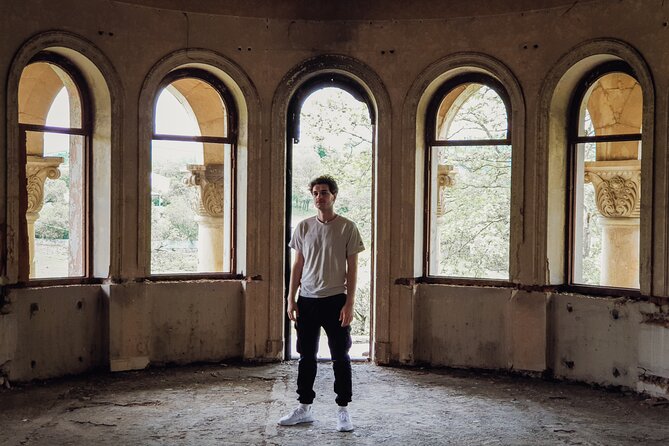
- Guide-led photography help: Akaki adjusts where you stand for better shots
- Free admission ticket included for the stop
- Comfortable pacing: moderate physical fitness level is enough, with time for walking between sanatorium areas
- Private by default: only your group participates, with English offered
Soviet spa ruins, but you actually understand why
Tskhaltubo is one of those places where buildings look like leftovers, but the purpose is still readable. During the Soviet era, it became a major spa destination built around balneology: treating health conditions through bathing in mineral-enriched water. If you like seeing how countries organized everyday life, this tour gives you that lens fast.
What makes Tskhaltubo especially interesting is the scale and timing. Construction on the resort’s 18 sanatoriums began in the 1920s, and by the 1980s, trains were arriving daily from Moscow. That means you’re not just touring a single abandoned facility. You’re walking through a whole system that served large numbers of people, over many decades.
The tour also frames the springs in a very practical way. The mineral water emerges at a comfortable temperature and is transferred directly to baths without cooling or heating. The Soviet-era claims around what the water could help with include ailments related to the limbs, peripheral nervous system, skin, and even cardiac and vascular conditions. I’d treat those claims as historical context rather than medical advice, but it helps you understand why people dedicated so much time and money to coming here.
Getting from Kutaisi to Tskhaltubo: pickup and timing that matter
The tour is based in Kutaisi, and it starts at the Free Walking Tour KutaisiGelati Kutaisi meeting point (Kutaisi 4600, Georgia). The start time listed is 2:00 pm, and the activity ends back at the meeting point.
You’ll want to plan your day around that early afternoon start, especially if you’re already doing other Kutaisi sights in the morning. The total duration is about 3 hours 30 minutes, so you’re not stuck for half a day. Still, you’re moving from Kutaisi out to Tskhaltubo and back, so schedule breathing room before and after.
Two practical perks help: pickup is offered, and you’ll have a mobile ticket. Pickup can save you time and stress in a city where it’s easy to lose track of meeting points during busy tourist hours. And mobile ticketing means you’re not hunting for paper.
One more reality check: the tour notes that it’s near public transportation and requires moderate physical fitness. That doesn’t mean it’s a hike, but it does mean expect some walking on uneven ground and moving between different building clusters.
Tskhaltubo in 3.5 hours: what the on-site experience feels like
This tour is built around a single main stop: Tskaltubo. That’s a good design choice if you want depth instead of rushed sightseeing. Instead of spending most of the time in a van, you arrive, get the background, then spend the bulk of the outing seeing multiple sanatorium complexes.
Here’s what that typically means on the ground:
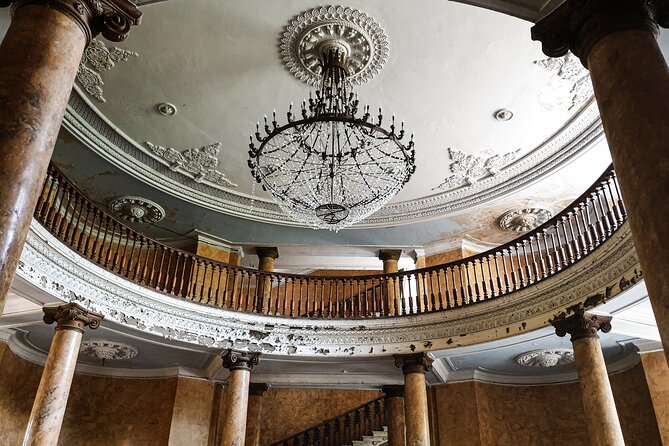
You’ll look at different buildings that had different roles, but all belonged to the same Soviet “spa world.” One sanatorium may give you a stronger sense of the resort’s institutional scale, while another helps you notice how the design changed with function and time. Without guidance, it’s easy to see ruins only as ruins. With a guide, you can start reading the place: who would have used it, what the resort was trying to accomplish, and how it fit into the broader Soviet balneology plan.
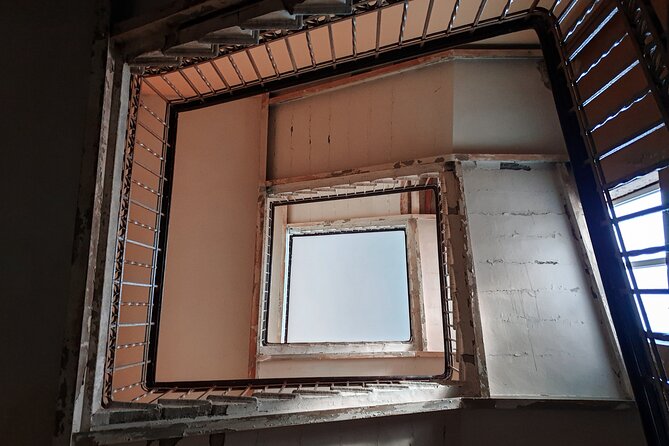
You’ll also get time for photography angles. Akaki is known for helping you position yourself for the best shots. That matters here because you’re often photographing through partial entrances, stairways, and corridors where viewpoints can make the difference between a flat image and one that looks like a scene from a TV show.
The tour also emphasizes safety inside buildings. Abandoned sanatoriums can be unstable, dark, and uneven. A good guide doesn’t just talk history; they actively guide where to step, how long to stay in risky areas, and when to move on.
The sanatorium story: why these buildings weren’t random
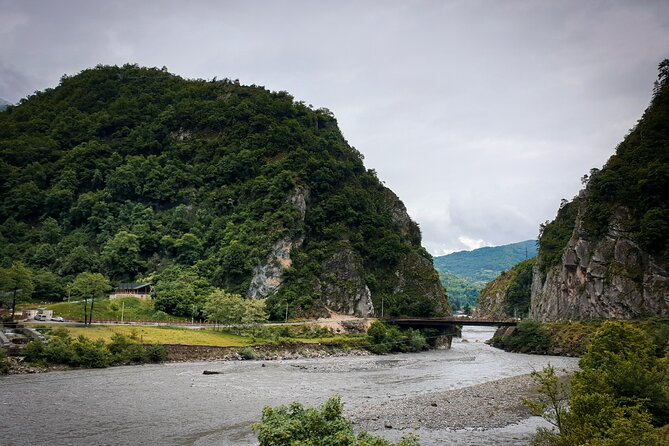
Tskhaltubo didn’t become a spa resort by accident. The area was linked to healing properties of the springs as early as the 18th century, when foreign researchers wrote about them. Then, in 1920, the territory became state property, and the function shifted toward balneology resort operations.
In the Soviet period, balneotherapy became part of the official spa culture. The idea was simple: treat conditions by bathing in mineral-enriched water. The water arriving directly from the springs at bathing temperature also helped the system feel efficient and controlled.
So when you see abandoned sanatoriums now, try to picture the logistics that supported them:
- trains bringing visitors in large numbers
- scheduled bathing and recovery routines
- medical staff and daily operations built into the resort’s rhythm
- the architecture designed to handle flow, not just aesthetics
That’s why this tour is more satisfying than a quick “look at the ruins” walk. You’re not guessing. You’re learning what the resort was meant to do, then seeing how the buildings reflect that purpose.
Also, the “Soviet Riviera” label isn’t just poetic. It points to how the resort sat inside a larger idea of leisure, health, and state planning. Once you see the 18 sanatoriums as a coordinated destination, everything feels more coherent.
Akaki’s guide style: history with pacing and photo sense
A lot of guides can explain history. What makes this tour stand out is how the explanations connect to what you’re looking at in real time.
Akaki is described as warm and friendly, with extensive knowledge. That’s useful because Tskhaltubo has layers: early spring research, Soviet state ownership, the rise of balneology operations, and later the eventual abandonment and decay. Instead of dumping dates, a good guide keeps the flow understandable while you’re still in the middle of the buildings.
Akaki is also mindful about safety in the structures. That might not sound exciting on paper, but in practice it changes the whole vibe of the tour. You relax. You focus on the place. You’re not constantly worried about where the ground ends or whether a doorway is going to be safe to enter.
And then there’s the photography help. If you care about getting shots that feel like real discovery, this matters. He helps you figure out which angles work best so you don’t spend time just wandering and guessing.
Price and value: $78.27 for 3.5 hours in the Soviet spa zone
At $78.27 per person for about 3 hours 30 minutes, this sits in a mid-range price band for a specialized historical site tour from Kutaisi.
What pushes the value upward is the combination of:
- pickup offered (less hassle, fewer logistics headaches)
- English instruction
- a focused on-site visit to Tskhaltubo
- free admission ticket included
- a guide who helps with both context and photography
If you were to visit Tskhaltubo on your own, you’d need to solve the “how do I understand what I’m seeing” problem. This tour does that for you, and it compresses the learning curve into one outing.
There’s one potential drawback on the value side: if timing or group arrangements don’t match what you expect, you lose the benefit of a smooth private experience. The good news is that the tour is clearly set up as private-only your group, so if you’re booking for a specific purpose (like asking lots of questions), it’s worth confirming the details early so your time stays yours.
Logistics you should think about before you go
This tour comes with a few practical signals that help you plan:
- You’ll need moderate physical fitness. Think comfortable walking and the ability to move between areas safely.
- It’s marked as requiring good weather. If the weather turns, the experience may be canceled and you’ll be offered another date or a full refund.
- It operates as a private tour/activity, meaning only your group participates.
- Confirmation happens at booking, and the meeting point is near public transportation.
Here’s my straight advice: wear shoes you don’t mind getting a bit dirty and bring a layer. Buildings can feel cooler than the street, and abandoned interiors often have uneven footing. Also, if your schedule is tight, double-check the start time and pickup details in your message thread the day before.
Because one account reported confusion about time and private vs group arrangement, I treat this as a “verify early” tour. Not because it’s always chaotic, but because a 2 pm start is easier to enjoy when you’re not running around trying to find someone at the last second.
Who should book this tour (and who might not)
This tour is ideal if you:
- like Soviet-era design and want context beyond a few photos
- enjoy ruins, but only when someone explains what the place was for
- care about getting strong photography angles
- prefer a guided visit with safety-minded guidance inside structures
It may be less ideal if you:
- want a super relaxed, no-walking afternoon (there will be some moving around)
- dislike sites where interiors can feel unpredictable
- are extremely sensitive to last-minute schedule changes and prefer absolutely zero uncertainty
If you’re in Kutaisi for a short time and want one outing that gives you both story and visuals, this checks a lot of boxes quickly.
Should you book the Tskhaltubo Old Soviet Spa Tour?
I’d book it if your goal is to see Tskhaltubo’s Soviet sanatorium world with clear explanation, not just a drive-by ruin stop. The on-site focus, the English guide, the included free admission ticket, and Akaki’s hands-on approach to safety and photo angles make it a strong use of a half-day.
If you’re the type who likes asking questions and comparing what you see to the history of how Soviet spa culture worked, this is a good fit. Just do one smart thing: confirm the start time and pickup details early in the messaging thread so you’re not dealing with surprises on the day.
FAQ
FAQ
Where does the Tskhaltubo Old Soviet Spa Tour start?
It starts at the Free Walking Tour KutaisiGelati Kutaisi meeting point in Kutaisi (Kutaisi 4600, Georgia).
How long is the tour?
The duration is approximately 3 hours 30 minutes.
What time does the tour begin?
The start time listed is 2:00 pm.
How much does it cost?
The price is $78.27 per person.
Is pickup included?
Pickup is offered.
What language is the tour in?
The tour is offered in English.
Is this tour private?
Yes. It is a private tour/activity, so only your group will participate.
Is there admission included?
An admission ticket is listed as free for the stop.
What if the weather is bad?
The experience requires good weather. If it’s canceled due to poor weather, you’ll be offered a different date or a full refund.